
PE teachers in the United States earn an average of $48,000 to $65,000 annually, with salaries varying widely based on location, experience, and school district funding. Public school PE teachers typically start around $42,000 in their first year, while those with 15 or more years of experience in well-funded districts can reach $80,000 or more.
But the conversation around PE teacher income shouldn’t stop at the base salary figure on your contract. The reality is that many physical education teachers are discovering creative ways to expand their earning potential beyond the school day. This matters because teaching, particularly in specialized areas like physical education, often comes with the passion but not always the paycheck that reflects the impact you’re making in students’ lives.
What makes PE teachers uniquely positioned for income growth is the same skill set that makes them excellent educators: the ability to motivate groups, design engaging activities, and build community. These abilities translate beautifully into side ventures that feel natural rather than forced. From coaching youth sports programs and leading outdoor education camps to teaching specialized fitness classes and creating online movement courses, PE teachers are turning their expertise into additional revenue streams.
The encouraging news is that you don’t need to reinvent yourself entirely. Many PE teachers are building fulfilling income opportunities by sharing their knowledge in creative formats, whether that’s developing wellness workshops for adults, partnering with community centers to teach movement-based art forms like dance, or even combining physical activity with traditional crafts in innovative programs. Your teaching foundation is already solid. The question becomes how you want to grow from there.
What PE Teachers Typically Earn
PE teacher salaries in 2026 vary significantly based on experience, location, and the type of school where you teach. On average, physical education teachers earn between $42,000 and $68,000 annually, with the national median hovering around $52,000. These figures reflect base salary only and don’t include additional income from coaching, summer programs, or other supplemental opportunities.
Entry-level PE teachers typically start between $38,000 and $48,000 in their first few years, depending on the district and state. Mid-career educators with five to ten years of experience usually see their salaries rise to $48,000-$62,000, while those with over fifteen years in the classroom can earn $58,000-$75,000 or more. Advanced degrees and specialized certifications often push experienced teachers toward the higher end of these ranges.
| Experience Level | Public School | Private School | Charter School |
|---|---|---|---|
| Entry-Level (0-3 years) | $40,000-$50,000 | $35,000-$45,000 | $38,000-$48,000 |
| Mid-Career (5-10 years) | $50,000-$64,000 | $42,000-$55,000 | $46,000-$58,000 |
| Experienced (15+ years) | $60,000-$78,000 | $50,000-$65,000 | $54,000-$68,000 |
Public schools generally offer the most competitive salaries, particularly in well-funded districts with strong union contracts. These positions come with structured pay scales that reward longevity and advanced credentials. Private schools often pay less in base salary but may offset this with smaller class sizes, better facilities, and flexible schedules that allow for outside income opportunities. Charter schools fall somewhere in between, with compensation packages that vary widely by organization and funding model.
Geographic location plays a massive role in determining your paycheck. PE teachers in high cost-of-living states like California, New York, and Massachusetts can earn $65,000-$85,000 with experience, while those in lower-cost regions might cap out around $50,000-$60,000. District funding levels matter enormously, wealthy suburban districts typically pay 20-30% more than rural or underfunded urban schools.
Credentials directly impact your earning potential. A master’s degree in education, kinesiology, or a related field can boost your salary by $3,000-$8,000 annually. Specialized certifications in adaptive physical education, health education, or coaching add value and often qualify you for higher pay grades or supplemental stipends.
Factors That Influence PE Teacher Pay
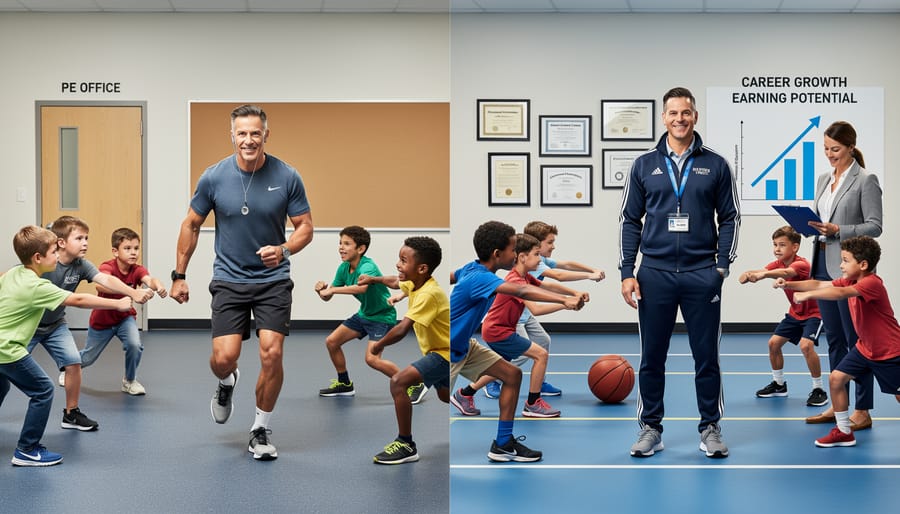
PE teacher salaries aren’t one-size-fits-all. What you earn depends on a mix of factors, some within your control and others tied to where you teach and the policies governing your district.
Where You Teach Matters Most
Location drives significant pay differences. A PE teacher in California or New York often earns 30-50% more than a colleague with identical experience in Mississippi or Oklahoma, largely due to state funding formulas and regional cost of living. Urban districts typically offer higher base salaries than rural areas, though suburban districts often strike the best balance between competitive pay and manageable living costs. Even neighboring school districts can differ by $10,000 or more annually based on local tax bases and budget priorities.
Education Level and Credentials
Advanced degrees directly impact your earning potential. Teachers with master’s degrees earn more than those with bachelor’s degrees, with many districts offering salary bumps of $3,000, $8,000 per year for advanced education. Specialist certifications in adaptive physical education or health education can also move you up the pay scale, particularly in states that explicitly reward additional credentials. Some districts require a master’s within five years of hire, while others make it optional but financially rewarding.
Union Strength and Tenure
Teacher unions negotiate salary schedules that standardize pay based on experience and education. Districts with strong collective bargaining pay effects generally offer better compensation packages, clearer advancement paths, and more robust benefits. Tenure status itself doesn’t usually increase base salary, but it provides job security that can translate to long-term earnings stability and access to top-tier salary steps.
School Type Variations
Public school PE teachers follow district salary schedules, while private school compensation varies widely. Some private schools pay competitively with public districts, but many offer lower base salaries offset by smaller class sizes or other benefits. Charter schools fall somewhere in between, with pay structures that can be less predictable.
Beyond the Classroom: Income Boosting Opportunities for PE Teachers
Coaching and Extracurricular Activities
Coaching school sports teams remains one of the most accessible ways for PE teachers to increase their income without leaving the education system. Most school districts offer coaching stipends that range from $2,000 to $8,000 per season, depending on the sport’s level, season length, and your experience. Head varsity coaches typically earn more than assistant or junior varsity coaches, with football and basketball positions often commanding the highest supplements due to longer seasons and greater time demands.
The time commitment varies significantly by sport. Fall and winter sports like soccer, basketball, and wrestling might require 15-20 hours per week during their seasons, including practices, games, travel, and administrative tasks. Spring sports tend to have similar schedules. Many PE teachers coach multiple seasons throughout the year, potentially adding $6,000 to $15,000 annually to their base salary.
After-school fitness programs and intramural activities offer smaller but consistent supplements, typically $1,500 to $3,500 per year for a few hours weekly. These programs require less competitive pressure than varsity coaching while still providing meaningful income.
Summer camps present another lucrative opportunity. Running or directing a week-long sports camp can pay $500 to $1,500 per week, and many PE teachers organize multiple sessions. The concentrated time commitment works well with summer schedules, and you can often incorporate specialized skills or creative approaches that make your camps stand out.
Private Lessons and Freelance Instruction
Private coaching and freelance instruction offer PE teachers a flexible way to earn additional income while doing what they love. Many teachers leverage their expertise to offer one-on-one or small-group sessions in sports like tennis, basketball, or soccer during evenings and weekends. The beauty of this approach is that you set your own schedule and rates based on your experience and local market demand.
Specialized skills command premium rates. If you hold certifications in swimming, martial arts, yoga, or dance, you can attract clients willing to pay more for expert instruction. Personal fitness training is another lucrative option, especially if you earn a nationally recognized certification like ACE or NASM. Parents seeking skilled coaches for their children and adults wanting personalized fitness guidance represent steady client bases.
Building your clientele starts with word-of-mouth. Begin by offering sessions to friends, family, and students’ families. Create simple flyers for community centers, local gyms, and sports facilities. A basic website or social media presence helps potential clients find you and understand what you offer.
Pricing varies widely by location and specialty, but most PE teachers starting out charge between $30 and $75 per hour for private lessons. Research what other instructors in your area charge to stay competitive. As you gain experience and testimonials, you can raise your rates. Consider offering package deals or group sessions to maximize your time and income potential.
Teaching Skills Workshops and Creative Classes
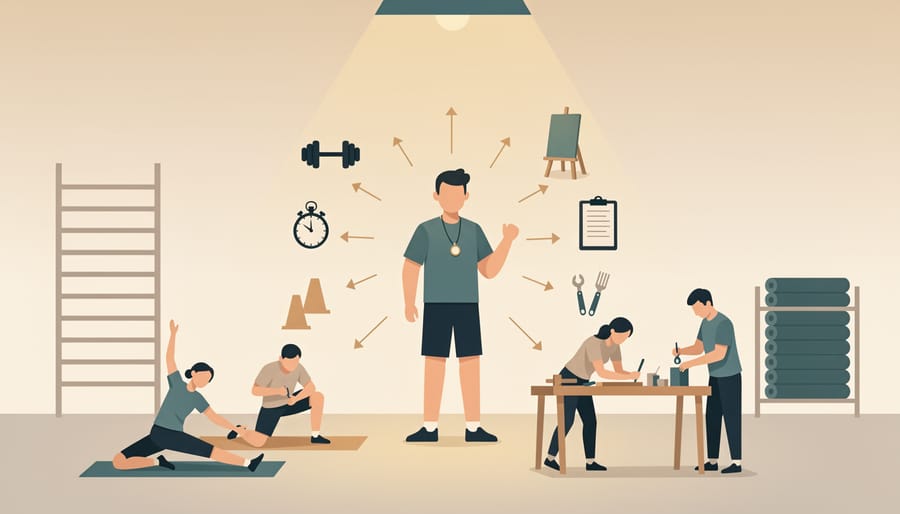
Your classroom skills transfer directly to teaching creative workshops, and the income potential is real. PE teachers excel at breaking down complex movements, managing groups, and creating safe learning environments. These same abilities make you an ideal instructor for hands-on craft classes, whether you teach pottery, woodworking, metalwork, or fiber arts.
Many PE teachers have discovered that their personal hobbies can become profitable side ventures. If you’ve always wanted to start woodworking or explore another traditional craft, you’re building a skill that can generate income. Weekend workshops in your garage or local community center typically earn $200-500 per session, depending on class size and materials. Monthly earnings from a few weekend classes can add $800-2,000 to your teaching salary.
Platforms like Bush Furniture Worldwide Online Courses remove many barriers to entry. You don’t need a studio or expensive overhead, just genuine knowledge and the teaching ability you already possess. The collaborative learning model connects you with a supportive community of fellow instructors and eager students. You can share blacksmithing techniques, pottery fundamentals, or leather working basics, drawing on the same lesson-planning and demonstration skills you use daily.
Teachers who choose blacksmithing course instruction, for example, often start with beginner sessions before developing specialized offerings. Your background in adaptive instruction and differentiated learning gives you an edge, you already know how to meet students where they are and guide them toward mastery. This path lets you monetize your creative passions while building community connections beyond the school day.
Curriculum Development and Consulting
PE teachers possess deep expertise in program design, student engagement, and wellness strategy, skills that translate directly into consulting and curriculum development work. Many districts, charter schools, and private organizations actively seek experienced educators to design age-appropriate fitness programs, adapt PE curricula for diverse learners, or review existing wellness initiatives.
Contract opportunities range from one-time projects to ongoing relationships. You might develop a comprehensive K-12 PE curriculum for a new school, create adaptive fitness modules for students with disabilities, or consult with a youth sports organization on best practices for skill progression. Some teachers work with education technology companies to design digital PE content or assessment tools.
Rates vary widely based on project scope and your experience, but curriculum development typically pays $50-150 per hour, with full curriculum packages commanding several thousand dollars. Freelance consulting can supplement your income substantially while building your professional reputation.
Start by networking within education conferences, joining professional associations like SHAPE America, and showcasing your curriculum innovations on platforms like Teachers Pay Teachers. Many consulting relationships begin when colleagues or former administrators recommend your expertise to new schools or programs seeking guidance.
Success Stories: PE Teachers Who’ve Expanded Their Income
Seeing how fellow PE teachers have turned their passions into profitable side ventures can spark your own creative income journey. These real-world examples show that your teaching skills translate beautifully to opportunities beyond the gym.
Mike Rodriguez, a middle school PE teacher in Colorado, discovered woodworking during a summer break and never looked back. What started as a hobby became weekend workshops where he teaches basic furniture-making to community members. “I use the same progression and demonstration techniques I use teaching volleyball,” Mike explains. He now runs monthly Saturday sessions that bring in an extra $800, $1,200 per month, and he’s built a loyal group of students who return for advanced projects. The community aspect mirrors what he loves most about teaching, watching people gain confidence through hands-on learning.
Sarah Chen combined her PE teaching role with a lifelong love of ceramics by launching online pottery courses through collaborative learning platforms. She films throwing demonstrations after school and hosts live Q&A sessions on weekends. Her courses attract both beginners and fellow educators looking for creative outlets. Sarah reports earning an additional $15,000 annually, but values the connections just as much. “My students share their work in our community forum, and it’s incredibly rewarding, just like seeing a student nail a difficult skill in class.” Some PE teachers have found similar success offering sculpture workshops that blend artistic expression with hands-on instruction.
James Walker took a more traditional route, coaching three youth sports teams year-round, soccer in fall, basketball in winter, and baseball in spring. Combined with running summer sports camps, he adds roughly $8,000 to his annual income while staying deeply connected to the athletic community he loves.
These teachers prove that your instructional skills, discipline, and ability to inspire others create countless pathways to supplement your income while doing what you genuinely enjoy.
Steps to Increase Your PE Teacher Income
Boosting your income as a PE teacher requires a strategic approach that combines professional development with creative thinking. Rather than waiting for annual raises to inch upward, you can take control of your earning potential through deliberate steps that build on your existing skills and passions.
- Pursue Advanced CredentialsEarning a Master’s degree in physical education, kinesiology, or education administration typically increases your salary placement on the district pay scale. Look for programs that offer evening or online options to minimize disruption to your teaching schedule. Beyond degrees, specialized certifications in adaptive PE, health education, or sport psychology can qualify you for supplemental pay and open doors to consulting opportunities.
- Volunteer for Additional ResponsibilitiesMost schools offer stipends for department chair positions, curriculum coordinators, or mentoring roles. These typically range from $1,500 to $5,000 annually and demonstrate leadership that positions you for future advancement. Start by expressing interest during administrative meetings and documenting your willingness to contribute beyond your classroom duties.
- Build Your Personal BrandCreate a professional presence that showcases your expertise. Start a blog or YouTube channel focused on fitness education, teaching strategies, or your personal interests outside PE. This visibility can attract workshop opportunities, speaking engagements, and partnerships. Document your creative hobbies, whether you’re learning what is epoxy resin for DIY projects or mastering woodworking techniques, as these authentic passions resonate with communities seeking skilled instructors.
- Network StrategicallyJoin professional organizations like SHAPE America, attend education conferences, and participate in local maker spaces or craft guilds. These connections often lead to paid opportunities you wouldn’t find through traditional job postings. Engage genuinely with both education and creative communities, as cross-pollination between your teaching expertise and personal interests frequently sparks income-generating ideas.
- Launch a Targeted Side VentureIdentify where your skills and interests intersect with market demand. If you’re passionate about traditional crafts, platforms designed for collaborative learning allow you to share that expertise while earning supplemental income. Start small with weekend workshops or a single online course, then expand based on response and your available time.
The key is consistency. Choose one or two strategies that genuinely excite you, commit to developing them over six to twelve months, and track your progress. Teachers who successfully increase their income rarely do everything at once, they focus their energy where passion meets opportunity, then build from there.
Common Questions About PE Teacher Income
Do PE teachers earn what other teachers earn, or is there a salary gap? In most public school districts, base pay follows a unified salary schedule, meaning a PE teacher with the same experience and education level earns the same as an English or math teacher. Your starting salary and annual increases typically depend on your years of service and degrees held, not your subject area. Private schools may have more flexibility in compensation, but the principle generally holds: physical education teachers are paid on par with their classroom colleagues.
How much do coaching stipends typically add to my income?
Coaching supplements vary widely by district, sport, and level of competition, but they commonly range from $2,000 to $8,000 per season. Head coaches of high-profile varsity sports often earn more than assistant coaches or those leading junior varsity teams.
Can I teach online courses as a PE teacher?
Absolutely. Many PE teachers create online fitness programs, movement tutorials, or wellness courses. You can also branch into teaching creative skills you’re passionate about, such as woodworking or pottery, through collaborative learning platforms that support educators.
What certifications increase my salary the most?
Earning a master’s degree typically bumps you to a higher salary tier, often adding $5,000 to $10,000 annually. Specialized certifications in adaptive physical education, health education, or athletic training can also qualify you for additional stipends or leadership roles.
Are there solid retirement benefits for PE teachers?
Yes. Most public school PE teachers participate in state pension systems that provide defined-benefit retirement plans, along with access to supplemental retirement accounts. These benefits are a significant component of total compensation and long-term financial security.
What if I want to expand my income beyond traditional teaching? The skills you’ve developed as a PE teacher, instructional design, group management, motivation, transfer beautifully to side ventures. Many educators successfully teach weekend workshops in hobbies like blacksmithing, ceramics, or even how to choose a glass degree path for creative career seekers. These opportunities let you connect with new communities, share your passions, and build additional income streams that complement your teaching career. The key is identifying what excites you and finding platforms or local venues that support collaborative learning and skill-sharing.
Your income as a PE teacher isn’t limited to your base salary. While traditional advancement through certifications and advanced degrees provides steady growth, the real opportunity lies in recognizing how versatile your teaching skills are. Whether you’re drawn to coaching competitive teams, sharing fitness expertise through private lessons, or exploring creative passions like woodworking or pottery through workshop instruction, you possess the organizational ability and communication skills that make these ventures successful.
The landscape has shifted. Platforms connecting educators with eager learners make it easier than ever to turn hobbies into income streams. A teacher who loves blacksmithing can build a weekend workshop business. Someone passionate about ceramics can develop an online course reaching students nationwide. These aren’t distractions from your career, they’re extensions of what you already do well: inspiring others to develop new skills.
Start by identifying what excites you beyond the gym. Then connect with communities that support creative educators, whether through collaborative learning platforms or local maker spaces. Your teaching expertise is the foundation; your willingness to explore is what unlocks new income and deeper fulfillment in both your professional and personal life.